

The Thailand Student Visa – officially the Non-Immigrant Visa Category “ED” (Education) – is the required visa for foreign nationals who want to study at accredited educational institutions in the Kingdom. Whether you are enrolling in a Thai language course, pursuing a university degree, attending a training program, or studying Muay Thai, this visa is your legal pathway to long-term study in Thailand.
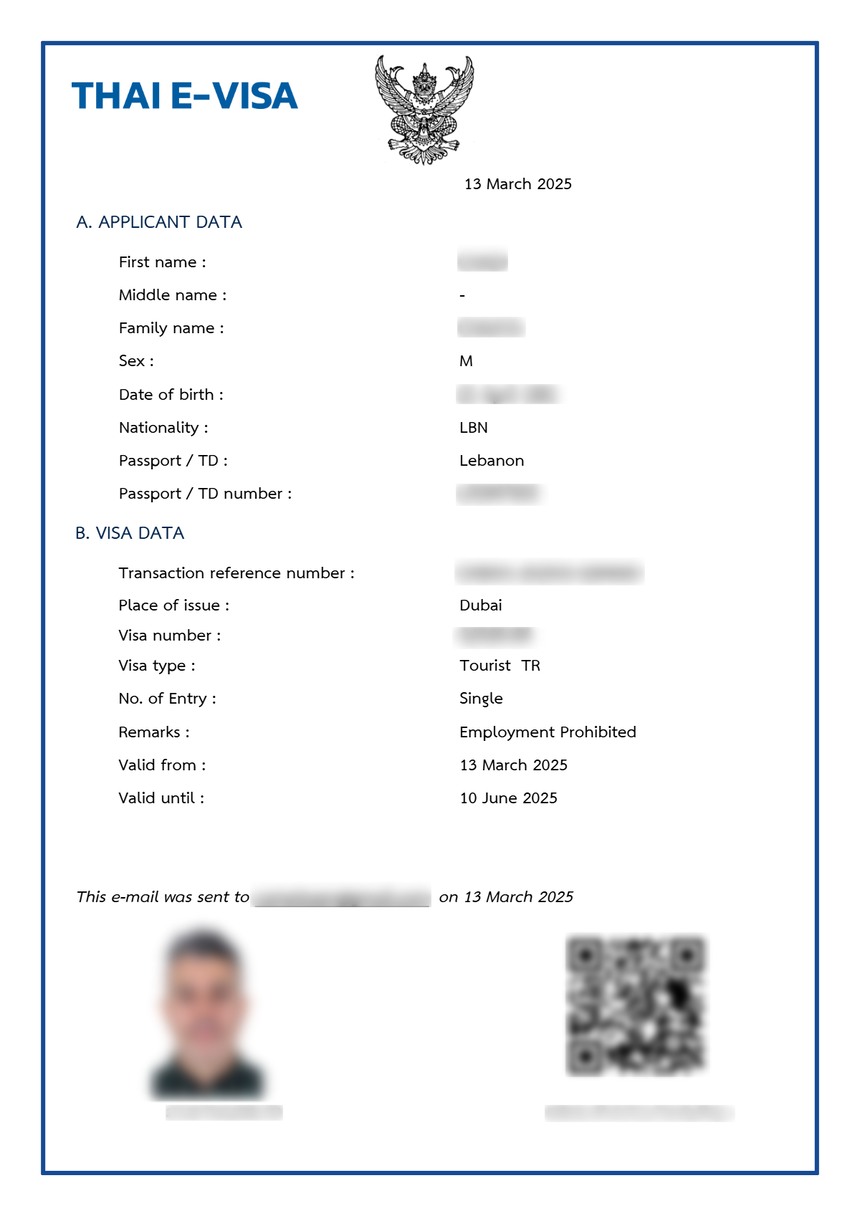
This guide covers everything: visa types, eligibility, required documents, fees, the application process, extensions, reporting requirements, and the rules that govern student stays in Thailand.
What Is the Thailand Student Visa?
Thailand does not issue a standalone “student visa.” Instead, foreign students must obtain a Non-Immigrant Visa “ED” – issued by Royal Thai Embassies, Consulates-General, or through the Thailand e-Visa system.
The Non-Immigrant ED Visa allows you to enter Thailand for the purpose of education. Once in the country, you must apply for a one-year extension of stay at the local Immigration Bureau, supported by enrollment documentation from your school or university.
You cannot legally study long-term in Thailand on a tourist visa or visa-on-arrival. While short courses (under 30 days) may technically fall within tourist visa allowances, any course lasting more than a few weeks requires proper ED visa status.
Who Needs a Student Visa?
The ED visa is required for:
- University students enrolled in bachelor’s, master’s, or doctoral programs at Thai universities
- Language students studying Thai, English, or other languages at accredited language schools
- Vocational students attending technical or vocational training institutions
- Exchange students participating in formal exchange programs
- Training program attendees enrolled in certified professional or vocational courses
- Muay Thai and cultural students studying at registered training camps or cultural institutions
Types of Thailand Student Visas
Single-Entry Non-Immigrant ED Visa
The standard option for most international students.
- Validity: 3 months from the date of issuance
- Stay duration: Up to 90 days per entry
- Entries: One
- Fee: 2,000 THB (approximately $55 USD)
This visa is converted into a longer-term stay through a one-year extension at the Thai Immigration Bureau after arrival. It is the most common pathway for students in degree programs and language courses.
Multiple-Entry Non-Immigrant ED Visa
For students who need to travel in and out of Thailand during their studies.
- Validity: 1 year from the date of issuance
- Stay duration: Up to 90 days per entry
- Entries: Unlimited within the validity period
- Fee: 5,000 THB (approximately $140 USD)
This option is less commonly issued and typically reserved for students at well-established universities with documented exchange or research programs that require international travel.
Education Visa Exemptions
Nationals of certain countries may enter Thailand without a visa and then apply for an ED visa from within the country in limited circumstances. However, the standard and recommended approach is to apply for the ED visa at a Thai embassy or consulate in your home country or country of legal residence before traveling.
Eligibility Requirements
To qualify for a Thailand Student Visa, applicants must meet several criteria:
Age Requirements
- University programs: No upper age limit, but must meet the institution’s admission requirements
- Language schools: Typically 18 years or older; some schools accept students as young as 15 with parental consent
- Primary and secondary schools: Students under 18 require a parent or legal guardian’s consent and may need additional documentation
Institutional Accreditation
The school, university, or institution must be accredited and recognized by the Thai Ministry of Education. This is critical – visas issued through unaccredited institutions can be revoked, and students may face deportation.
Before enrolling, verify that your institution is listed with:
– The Office of the Higher Education Commission (OHEC) for universities
– The Office of the Private Education Commission (OPEC) for private schools
– The Office of the Basic Education Commission (OBEC) for primary and secondary schools
Enrollment Proof
You must provide a formal letter of acceptance or enrollment from the institution. This letter must include:
– Your full name and passport number
– The program name and duration
– Confirmation of enrollment status
– The institution’s official stamp and authorized signature
Required Documents
The document requirements for a Thailand Student Visa are specific and must be presented in the correct format. Requirements may vary slightly between embassies, so always check with your specific Thai embassy or consulate.
Core Documents
- Passport – Valid for at least 6 months beyond the intended stay, with at least 2 blank pages
- Visa application form – Completed and signed (available from the Thai embassy or e-Visa portal)
- Recent passport-sized photographs – Two photos, 4×6 cm, taken within the last 6 months, white background
- Acceptance or enrollment letter – From the accredited Thai educational institution
- Academic transcripts – From previous educational institutions (translated into English or Thai if necessary)
- Proof of financial means – Bank statements showing sufficient funds (typically at least 20,000 THB for individuals or 40,000 THB for families per month of stay)
- Visa fee – 2,000 THB for single-entry; 5,000 THB for multiple-entry
Additional Documents (Embassy-Dependent)
- Police clearance certificate – Some embassies require a criminal background check from your home country
- Medical certificate – Proof of good health, sometimes including specific vaccinations
- Letter of guarantee – From the institution or a sponsor confirming financial and academic support
- Proof of accommodation – Confirmation of housing arrangements in Thailand
- Return flight booking – Some embassies require evidence of onward travel plans
- Insurance proof – Health insurance valid in Thailand for the duration of stay
Document Authentication
Documents issued outside Thailand may need to be:
1. Notarized by a public notary in your home country
2. Authenticated by your country’s Ministry of Foreign Affairs
3. Legalized by the Royal Thai Embassy or Consulate
The specific authentication chain varies by country. Check with your Thai embassy for the exact requirements.
How to Apply for a Thailand Student Visa
Step 1: Secure Admission
Before applying for the visa, you must be accepted by an accredited Thai educational institution. The school will provide you with an official enrollment letter and, in many cases, supporting documents such as a letter of guarantee.
Processing times for admission vary:
– Language schools: Often 1-2 weeks
– Universities: 2-8 weeks, depending on the program
– Exchange programs: Coordinated between your home and Thai institutions
Step 2: Gather Documents
Collect all required documents as listed above. Ensure that:
– All documents are in English or Thai (or officially translated)
– Bank statements cover the required period (usually the last 3-6 months)
– Photographs meet the exact specifications
– Your passport validity extends at least 6 months beyond your planned stay
Step 3: Submit Your Application
Apply at the Royal Thai Embassy or Consulate in your country of residence. Some countries now support online applications through the e-Visa system.
In-person application:
– Visit the embassy during visa application hours
– Submit all documents along with the visa fee
– You may be asked to attend a brief interview
E-Visa application:
– Create an account on the e-Visa portal
– Upload scanned copies of all required documents
– Pay the visa fee online
– Track your application status through the portal
Step 4: Receive Your Visa
Processing times vary by embassy, typically ranging from 3 to 10 business days. Some embassies offer expedited processing for an additional fee.
Once approved, your passport will be returned with the ED visa stamp. Verify that all details (name, passport number, visa type, validity dates) are correct before leaving the embassy.
Step 5: Enter Thailand
Present your passport with the ED visa stamp at Thai immigration upon arrival. You will receive an entry stamp allowing a stay of up to 90 days. Keep your Thailand Digital Arrival Card (TDAC) confirmation if applicable.
Step 6: Apply for Extension of Stay
Within the first 90 days, visit the Thai Immigration Bureau to apply for a one-year extension of stay. You will need:
– Your passport and current ED visa
– TM.7 form (application for extension of stay)
– Enrollment confirmation from your institution
– Proof of attendance (some institutions provide this directly to immigration)
– 1,900 THB extension fee
– Passport-sized photographs
The extension is granted for one year and must be renewed annually as long as you remain enrolled.
After Arrival: Ongoing Requirements
90-Day Reporting
All foreigners staying in Thailand for more than 90 days must report their current address to immigration every 90 days. This can be done:
- In person at the local Immigration Bureau
- By mail using the TM.47 form
- Online through the Thai Immigration Bureau website (when available)
- Through your institution – many schools and universities handle 90-day reporting for their students
Failure to report on time results in a fine of 2,000 THB and can affect future visa extensions.
Re-Entry Permits
If you need to leave Thailand temporarily during your ED visa validity period, you must obtain a re-entry permit before departing. Without it, your visa and extension of stay are automatically cancelled upon exit.
- Single re-entry permit: 1,000 THB
- Multiple re-entry permit: 3,800 THB
Apply at the Immigration Bureau or at the airport before departure.
Attendance Requirements
Thai immigration strictly enforces attendance requirements for ED visa holders:
- Language schools: Minimum 80% attendance rate, verified through check-in systems and periodic immigration audits
- Universities: Must maintain satisfactory academic standing and enrollment status
- Other programs: Attendance verification as required by the institution and immigration
Immigration officers conduct random visits to educational institutions to verify student attendance. Students found to be absent without valid justification risk visa cancellation and deportation.
Costs Summary
| Item | Cost (THB) | Cost (USD approx.) |
|---|---|---|
| Single-entry ED visa | 2,000 | $55 |
| Multiple-entry ED visa | 5,000 | $140 |
| One-year extension of stay | 1,900 | $52 |
| Re-entry permit (single) | 1,000 | $28 |
| Re-entry permit (multiple) | 3,800 | $105 |
| 90-day reporting (on time) | Free | Free |
| 90-day reporting (late fine) | 2,000 | $55 |
Tuition fees vary significantly:
– Thai language courses: 15,000 – 50,000 THB per semester ($415 – $1,400)
– Private university programs: 50,000 – 200,000 THB per semester ($1,400 – $5,500)
– Public university programs: 20,000 – 80,000 THB per semester ($550 – $2,200)
Common Reasons for Visa Rejection
Understanding why applications are rejected can help you prepare a stronger case:
- Unaccredited institution – The school or program is not recognized by the Thai Ministry of Education
- Insufficient financial proof – Bank statements do not meet the minimum threshold or are not recent enough
- Incomplete documentation – Missing or improperly formatted documents
- Previous visa violations – Overstays, unauthorized work, or other immigration violations in Thailand
- Suspicious enrollment patterns – Enrolling in low-quality programs purely to maintain visa status is scrutinized and increasingly rejected
- Passport validity – Fewer than 6 months of validity remaining
Transitioning from Tourist to Student Visa
If you are already in Thailand on a tourist visa and wish to switch to an ED visa, the general rule is that you must leave the country and apply at a Thai embassy abroad. However, some immigration offices may process a change of visa status within Thailand in exceptional circumstances, particularly for university enrollment.
The most common approach:
1. Complete your enrollment and gather all documents while on your tourist visa
2. Travel to a nearby country (e.g., Laos, Malaysia, Cambodia) and apply for the ED visa at the Thai embassy there
3. Return to Thailand on the new ED visa
This process is commonly known as a “visa run” and is a well-established pathway for students who are already in Thailand.
Frequently Asked Questions
Can I work in Thailand on a student visa?
Generally, no. The ED visa does not authorize employment. Working on an ED visa is a violation of Thai immigration law and can result in fines, deportation, and future entry bans.
In rare cases, university students in certain programs may be granted permission for internships or limited work related to their studies. This requires separate authorization from both the educational institution and the Ministry of Labour.
How long can I stay in Thailand on a student visa?
The initial ED visa allows a stay of up to 90 days. After extension, you can stay for up to one year, renewable annually as long as you remain enrolled and meet attendance requirements.
There is no statutory limit on how many years you can renew, but immigration officers may scrutinize long-term renewals, particularly for language school students.
Do I need health insurance?
Health insurance is not a mandatory requirement for the ED visa itself, but it is strongly recommended. Thai public hospitals require payment for foreign nationals, and private hospital costs can be substantial. Some universities include health insurance in their enrollment packages.
Can my family accompany me?
Your spouse and children under 20 can apply for a Non-Immigrant “O” Visa (dependent visa) to accompany you. They will need proof of relationship (marriage certificate, birth certificates) and proof that you can financially support them during their stay.
What happens if I overstay?
Overstaying your visa validity is a serious offense in Thailand:
- Overstay of 1-90 days: Fine of 500 THB per day (maximum 20,000 THB) and possible re-entry ban
- Overstay of more than 90 days: Arrest, detention, deportation, and a ban from re-entering Thailand for 1-10 years depending on the length of overstay
Always monitor your visa validity and apply for extensions well before expiration.
Can I switch schools while on an ED visa?
Yes, but you must notify the Immigration Bureau and provide documentation from both the old and new institutions. The new institution must also be accredited. Failure to properly transfer your visa status can result in it being voided.