

The Thailand Work Visa – officially the Non-Immigrant Visa Category “B” for employment – is the gateway for foreigners who want to work legally in the Kingdom. Whether you are a teacher, engineer, executive, or digital professional relocating to Bangkok, Chiang Mai, or anywhere else in Thailand, this visa is your mandatory first step.
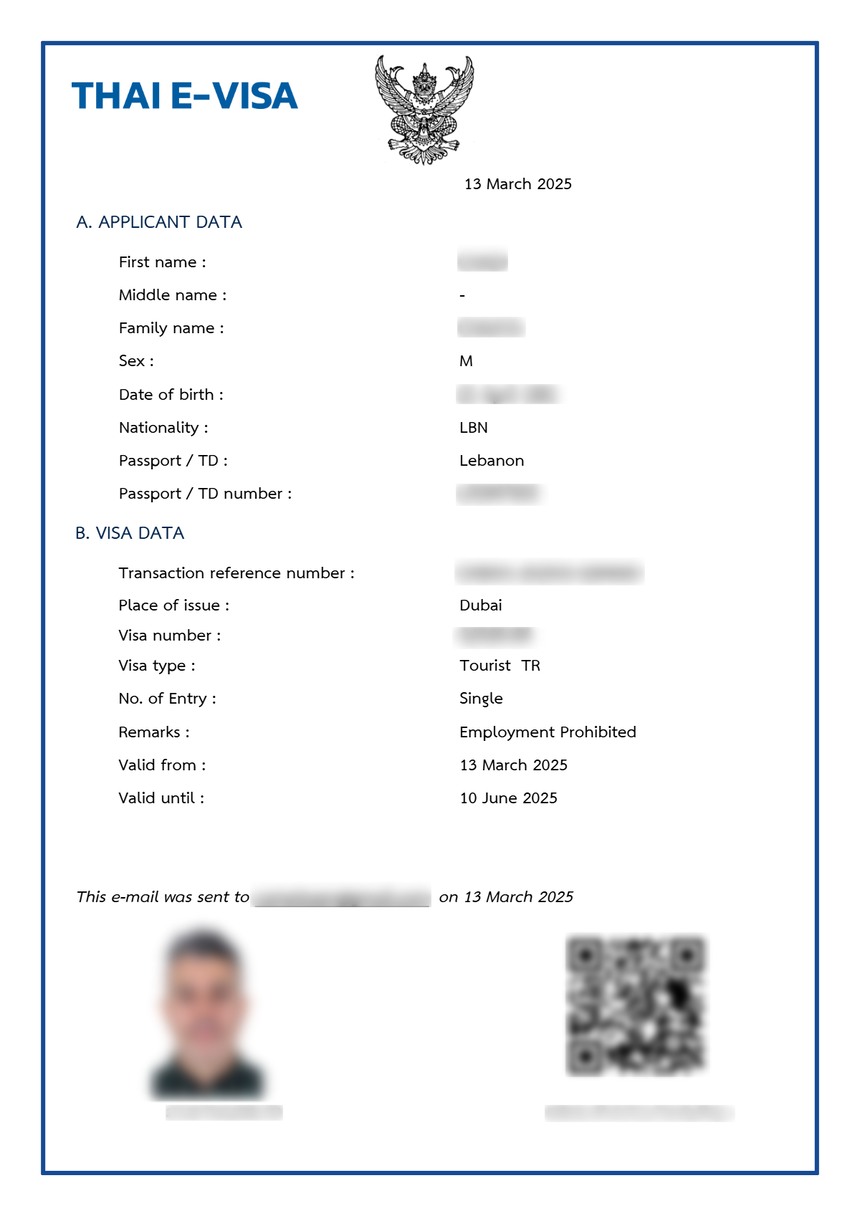
This guide covers everything you need to know: visa types, the relationship between visa and work permit, required documents, fees, the application process, and the rules that govern foreign employment in Thailand.
What Is the Thailand Work Visa?
Thailand does not issue a standalone “work visa.” Instead, foreigners who wish to work in Thailand must obtain two separate documents:
- A Non-Immigrant Visa “B” (the entry visa) – issued by Royal Thai Embassies, Consulates-General, or through the Thailand e-Visa system
- A Work Permit (the employment authorization) – issued by the Thai Ministry of Labour after you arrive in Thailand
The Non-Immigrant B Visa allows you to enter Thailand for the purpose of employment. The work permit then authorizes you to perform a specific job for a specific employer. You cannot legally work in Thailand with just a tourist visa, a transit visa, or a visa-on-arrival – doing so is a criminal offense that carries fines, imprisonment, and deportation.
Types of Thailand Work-Related Visas
Thailand offers several visa categories for foreigners who intend to work, each with different validity periods and entry allowances.
Single-Entry Non-Immigrant B Visa
The standard option for first-time workers and one-time employment contracts.
- Validity: 3 months from the date of issuance
- Stay duration: Up to 90 days per entry
- Entries: One
- Fee: 2,000 THB (approximately $55 USD)
Once in Thailand, you can apply for a one-year extension of stay at the Immigration Bureau, which effectively gives you a full year of legal residence tied to your employment.
Multiple-Entry Non-Immigrant B Visa
For professionals who need to travel in and out of Thailand during their employment period.
- Validity: 1 year from the date of issuance
- Stay duration: Up to 90 days per entry
- Entries: Unlimited within the validity period
- Fee: 5,000 THB (approximately $140 USD)
This visa is ideal for regional managers, consultants, or anyone whose job requires frequent international travel. Each entry allows up to 90 days, but you can leave and re-enter as many times as needed.
Three-Year Non-Immigrant B Visa
Available for established professionals with documented, ongoing employment relationships in Thailand.
- Validity: 3 years from the date of issuance
- Stay duration: Up to 90 days per entry
- Entries: Multiple
- Fee: 5,000 THB (same as 1-year multiple-entry)
Eligibility typically requires proof of ongoing employment, previous visa compliance, and sometimes a letter from the Board of Investment (BOI) or a Thai government agency. Not all embassies process this visa.
SMART Visa
Thailand’s SMART Visa program targets highly skilled professionals, investors, executives, and startups in targeted industries (S-Curve sectors). This specialized visa eliminates the need for a separate work permit.
- Talent SMART Visa: For highly skilled professionals in science and technology
- Investor SMART Visa: For investors in targeted technology companies
- Executive SMART Visa: For senior executives earning at least 200,000 THB per month
- Startup SMART Visa: For entrepreneurs establishing tech startups in Thailand
- Validity: Up to 4 years
- Fee: 10,000 THB
The SMART Visa also allows holders to bypass the 90-day reporting requirement and provides a fast-track work permit process – or none at all for some categories.
Thailand Work Visa Fees
| Visa Type | Fee (THB) | Fee (USD approx.) | Validity | Entries |
|---|---|---|---|---|
| Single-Entry Non-Imm B | 2,000 | $55 | 3 months | 1 |
| Multiple-Entry Non-Imm B | 5,000 | $140 | 1 year | Unlimited |
| Three-Year Multiple Non-Imm B | 5,000 | $140 | 3 years | Unlimited |
| SMART Visa | 10,000 | $275 | Up to 4 years | Multiple |
| Work Permit (new application) | 750-3,000 | $20-80 | 1 year | N/A |
Work permit fees vary depending on the duration requested. A one-year work permit costs 3,000 THB, while a three-month permit costs 750 THB. All fees are non-refundable.
The Work Permit Process
The work permit is a separate document from the visa and is handled by the Ministry of Labour. Here is how the process works.
Who Needs a Work Permit?
Every foreigner performing work in Thailand needs a work permit. This includes:
- Full-time employees at Thai companies
- Part-time workers and contractors
- Volunteers (in most cases)
- Teachers at schools and universities
- Foreign experts providing services
Who Is Exempt?
Certain categories of foreigners do not need a work permit:
- Members of diplomatic missions
- United Nations officials
- Foreigners performing urgent or emergency work for less than 15 days (must notify the authorities)
- Foreigners working under specific investment promotion laws (BOI-promoted companies have a fast-track process)
Documents Required from the Employer
Your Thai employer must prepare extensive documentation:
- Company registration documents (DBD certificate)
- Shareholder list (Or Bor Jor 5)
- VAT registration (Por Por 20)
- Social Security Fund registration
- Company financial statements and tax filings (Por Ngor Dor 50 and 30)
- Letter of employment specifying your position, salary, and job description
- Map to the company office
- List of all foreign employees currently working at the company
- WP3 application form (submitted to the Office of Foreign Workers Administration)
Documents Required from the Employee
- Passport with valid Non-Immigrant B Visa
- Copies of all passport pages (signed)
- Degree certificates and transcripts (originals and copies)
- Professional licenses or certifications related to the job
- Previous work permit (if you have worked in Thailand before)
- Alien income tax return (Por Ngor Dor 91) if previously employed
- Recent photographs (4 x 6 cm)
- Medical certificate from a licensed Thai hospital
Step-by-Step Process
- Employer submits WP3 form – Your employer applies at the Office of Foreign Workers Administration (or One Stop Service Centre for eligible companies)
- You obtain a Non-Immigrant B Visa at a Thai embassy abroad (the employer’s approval letter supports your visa application)
- You enter Thailand on the Non-Immigrant B Visa
- Employer submits the work permit application at the Department of Employment
- You collect the work permit – processing typically takes 7-10 business days
- Apply for a one-year extension of stay at the Immigration Bureau (if your initial visa is only 90 days)
The entire process from employer application to work permit collection typically takes 4-8 weeks.
The 4:1 Thai-to-Foreigner Employment Ratio
Under Thai labour law, employers must generally hire at least four Thai nationals for every one foreign employee. This ratio is strictly enforced during the work permit application process.
Exceptions exist for:
- BOI-promoted companies
- Companies registered under the Foreign Business Act
- Regional operating headquarters
- Companies in special economic zones
- Businesses with specific government exemptions
If your employer does not meet this ratio, the work permit application will be denied. Always confirm with your employer that they are compliant before beginning the visa process.
90-Day Reporting and Re-Entry Permits
90-Day Reporting
All foreigners staying in Thailand for more than 90 days must report their current address to the Immigration Bureau every 90 days. This is not a visa renewal – it is a notification requirement. Failure to report results in a fine of 2,000 THB and potential complications with future extensions.
You can report:
- In person at the nearest Immigration Bureau office
- By mail (registered post)
- Online through the Thai Immigration e-Reporting system (available for some nationalities)
- Through your employer (if they are authorized)
Re-Entry Permits
If you leave Thailand without a re-entry permit, your visa and work permit are automatically cancelled. To protect your status:
- Single re-entry permit: 1,000 THB
- Multiple re-entry permit: 3,800 THB
Apply at the Immigration Bureau before you travel. If your visa is multiple-entry, you do not need a separate re-entry permit.
Restricted Occupations for Foreigners
The Foreigners’ Working Act B.E. 2551 (2008) prohibits foreigners from performing certain occupations in Thailand. These include:
- Labour work (construction, agriculture without management role)
- Street vending
- Wood carving
- Driving (except forklift operators in some cases)
- Accounting (unless holding specific Thai certifications)
- Legal practice (except in certain international law contexts)
- Hairdressing and beauty services
- Thai traditional massage
- Real estate brokerage
Always verify that your intended position does not fall under a restricted category before applying.
Working Illegally in Thailand: Consequences
Working without a valid work permit – or performing work not described in your work permit – carries severe penalties under Thai law:
- Fine: 5,000 to 50,000 THB
- Imprisonment: Up to 5 years
- Deportation at your own expense
- Blacklisting from re-entering Thailand for up to 10 years
Employers who hire foreigners without proper work permits face fines of 10,000 to 100,000 THB per illegal worker and potential imprisonment of up to 3 years.
How to Apply for a Thailand Work Visa
Step 1: Secure a Job Offer
You must have a confirmed offer from a Thai employer before applying. The employer initiates the process by submitting the WP3 approval to the Ministry of Labour.
Step 2: Obtain a Non-Immigrant B Visa
With the employer’s approval letter in hand, apply for a Non-Immigrant B Visa at:
Option A: Online via Thailand e-Visa
1. Create an account at thaievisa.go.th
2. Select “Non-Immigrant B” as your visa type
3. Fill in personal details and employment information
4. Upload all required documents
5. Pay the visa fee by credit card
6. Wait for processing (5-10 business days)
7. Receive your e-Visa approval via email
Option B: At a Royal Thai Embassy or Consulate
1. Contact your nearest Royal Thai Embassy or Consulate-General
2. Gather all required original documents
3. Submit your application in person
4. Pay the visa fee in local currency
5. Collect your passport with the visa stamp (3-5 business days)
Step 3: Enter Thailand
Arrive in Thailand on your Non-Immigrant B Visa. At the immigration checkpoint, be prepared to show:
- Your passport with the visa stamp
- Your employer’s invitation letter
- Your Thailand Digital Arrival Card (TDAC) confirmation
Step 4: Obtain Your Work Permit
Your employer submits the work permit application on your behalf. You will need to visit the Department of Employment in person to collect the work permit once approved.
Step 5: Extend Your Stay
If your initial visa allows only 90 days, apply for a one-year extension of stay at the Immigration Bureau before your current permission expires. This requires the same documentation package used for the work permit application.
Frequently Asked Questions
Can I work in Thailand on a tourist visa?
No. Working on a tourist visa is illegal in Thailand. You must obtain a Non-Immigrant B Visa and a work permit before starting any employment. Tourist visa holders caught working face fines, imprisonment, and deportation.
How much does a Thailand work visa cost in total?
The visa itself costs 2,000 THB ($55) for a single-entry or 5,000 THB ($140) for a multiple-entry. The work permit costs 3,000 THB ($80) for one year. Including document preparation, translations, and medical certificates, the total cost typically ranges from 10,000 to 25,000 THB ($275-690 USD).
How long does it take to get a work visa for Thailand?
From job offer to work permit in hand, the process typically takes 4-8 weeks. The visa application at the embassy takes 3-10 business days. The work permit processing after arrival takes 7-10 business days. Document preparation on the employer side can add 2-4 weeks.
Do I need a degree to get a work permit in Thailand?
For most professional positions, yes. The Ministry of Labour generally requires a bachelor’s degree or higher relevant to the position. However, exceptions exist for certain skilled trades, IT professionals, and positions where specific experience can substitute for formal education.
Can I change employers while on a work permit?
Your work permit is tied to a specific employer. If you change jobs, your current work permit must be cancelled, and a new application must be submitted by your new employer. You may need to leave Thailand and re-enter on a new Non-Immigrant B Visa.
What is the minimum salary for a work permit in Thailand?
Thailand does not have a universal minimum salary for foreign workers. However, there are minimum salary requirements for work permit extensions based on nationality. For example, citizens of Japan, the United States, and most European countries typically need to show a minimum salary of 50,000 THB per month. Citizens of some Asian and African countries have lower thresholds.
Can I get a work visa for Thailand without a job offer?
For the standard Non-Immigrant B Visa, no – you need a confirmed job offer from a Thai employer. However, the SMART Visa Startup category allows entrepreneurs to establish a business in Thailand without a traditional employer. The Long-Term Resident (LTR) Visa also has options for remote workers and high-earning professionals.