
How Long Does a Thailand Visa Take to Process?
If you are planning a trip to Thailand, one of the first questions you will have is how long the visa takes to process. The answer depends on several factors: the type of visa you are applying for, where you submit your application, and how busy the embassy or consulate is at that time.
In general, Thailand visa processing time ranges from 5 to 15 business days for most visa types applied through embassies, consulates, or the official eVisa portal. However, some situations can be faster or slower. This guide breaks down everything you need to know so you can plan your application with confidence.
Standard Processing Times by Visa Type
Different visa categories have different processing timelines. Here is an overview of what to expect:
| Visa Type | Processing Time | Where to Apply |
|---|---|---|
| Tourist eVisa (Single Entry) | 5-15 business days | Thai embassy/consulate or thaievisa.go.th |
| Tourist Visa (Multiple Entry) | 5-15 business days | Thai embassy/consulate |
| Non-Immigrant Visa | 10-15 business days | Thai embassy/consulate |
| Visa on Arrival | 30 minutes – 1 hour | Airport immigration counter in Thailand |
| Visa Exemption | Instant (no application needed) | Stamp at port of entry |
| DTV (Digital Nomad) Visa | 5-15 business days | Thai embassy/consulate or eVisa portal |
| Thailand Elite Visa | 2-4 weeks | Thailand Privilege Card agents |
The most common visa for tourists is the Single-Entry Tourist Visa, which allows a stay of up to 60 days. This is also the visa type most frequently applied for through the eVisa system.
Thailand eVisa Processing Time
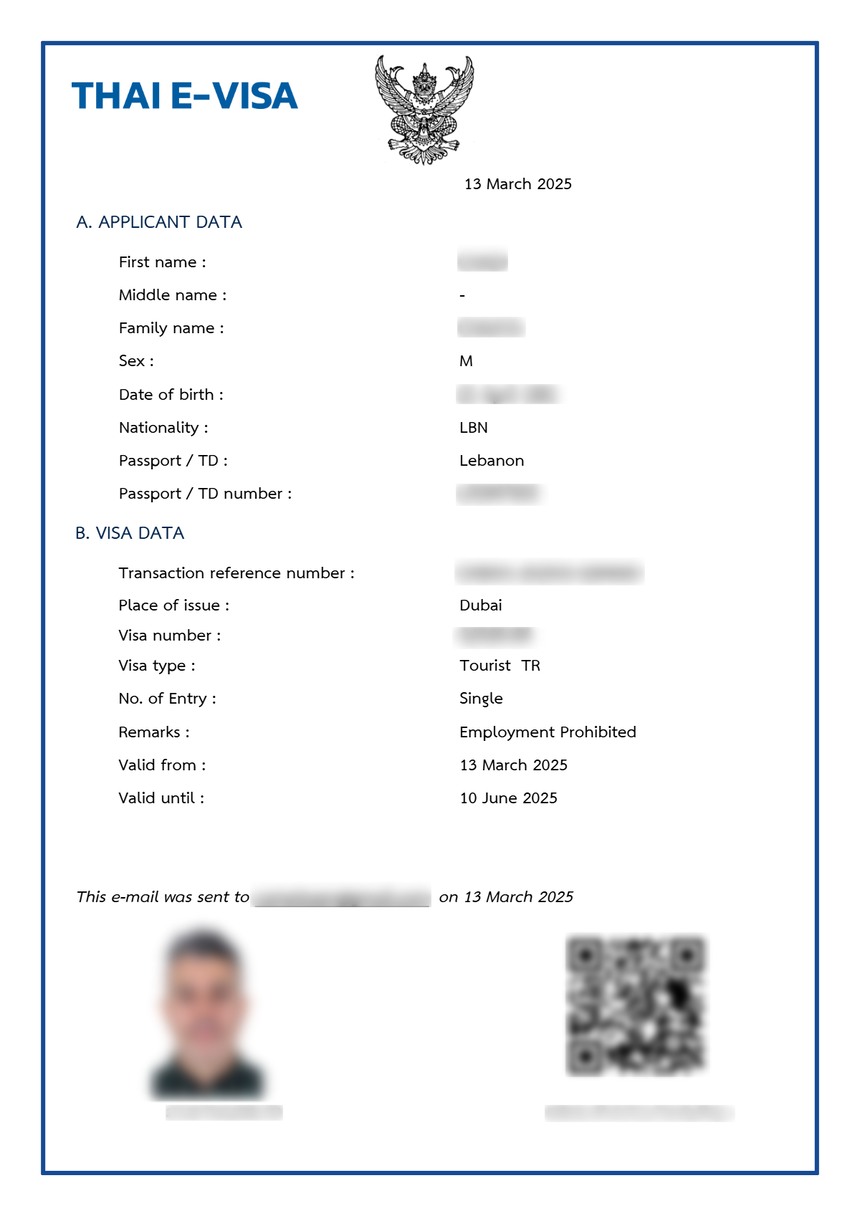
The Thailand eVisa is the official online visa application system launched by the Thai Ministry of Foreign Affairs. It allows travelers to apply for a visa without visiting an embassy in person.
How the eVisa Timeline Works
- Online application submission – You fill out the form, upload documents, and pay the fee online.
- Document review – The embassy or consulate reviews your application. This typically takes 5 to 15 business days.
- Approval notification – You receive an email confirmation with your eVisa.
- Travel – Print or save the eVisa confirmation and present it when boarding your flight and at Thai immigration.
Important: The Thai government recommends submitting your eVisa application at least 30 days before your intended travel date. This buffer accounts for potential delays, requests for additional documents, and peak-season backlogs.
eVisa Processing Variations by Location
Processing times for the eVisa can vary significantly depending on which embassy or consulate handles your application:
| Embassy/Consulate Location | Typical Processing Time |
|---|---|
| US – Washington D.C. | Up to 21 business days |
| US – Los Angeles Consulate | Up to 15 business days |
| UK – London | 5-15 business days |
| Australia – Canberra | 5-10 business days |
| India – New Delhi | 5-15 business days |
| Indonesia – Jakarta | 10 working days |
| Laos – Vientiane | 5-10 working days (eVisa up to 6 weeks) |
| Pakistan – Islamabad | ~14 working days |
These timelines are approximate and can change based on application volume, public holidays in both countries, and policy updates. The Vientiane embassy notably has longer eVisa processing times due to high demand, sometimes taking up to 6 weeks.
Processing Times by Embassy and Consulate
When you apply for a Thailand visa through a physical embassy or consulate, the processing time depends on the specific office handling your application.
High-Volume Embassies
Some Thai embassies and consulates receive a very high number of applications, which can extend processing times. The Royal Thai Embassy in Washington D.C., for example, quotes processing times of up to 21 business days during busy periods. The Los Angeles Consulate processes most applications within 15 business days.
Regional Variations
Embassies in Southeast Asia often have faster turnaround times due to proximity and established processing workflows. The Royal Thai Embassy in Vientiane, Laos, typically processes walk-in applications in 2 to 3 days, though eVisa applications from the same embassy can take significantly longer.
European embassies generally follow the 5 to 15 business day standard, with processing times sometimes varying by season. Summer months (June to August) and the holiday period (November to February) tend to be busier.
Thailand Visa on Arrival Processing Time
For travelers from 31 eligible countries, Thailand offers a Visa on Arrival at major airports and land border crossings. This is one of the fastest ways to get permission to enter Thailand.
Processing time at the immigration counter: 30 minutes to 1 hour
The actual wait depends on:
- Airport traffic – Bangkok Suvarnabhumi and Don Mueang airports can have long queues during peak hours.
- Time of day – Early morning and late evening arrivals tend to have shorter wait times.
- Completeness of documents – Having all required documents ready speeds up the process significantly.
Documents Needed for Visa on Arrival
To avoid delays at the counter, prepare these documents in advance:
- Valid passport (at least 30 days remaining validity)
- Completed Visa on Arrival application form
- One recent passport-sized photograph (4×6 cm)
- Proof of onward travel (confirmed flight booking leaving Thailand within 15 days)
- Proof of accommodation in Thailand
- Visa fee of 2,000 THB (cash, Thai baht only)
The Visa on Arrival allows a stay of up to 15 days and cannot be extended. If you plan to stay longer, consider applying for a tourist visa before you travel.
Factors That Affect Thailand Visa Processing Time
Several factors can cause your visa application to take longer or shorter than the typical timeframe:
1. Document Completeness
The most common cause of delays is incomplete or incorrect documentation. If the embassy requests additional documents, your processing time can be extended by 3 to 10 business days while you submit the missing paperwork and wait for a new review.
2. Nationality
Some nationalities require additional security checks or background screening, which can add days or even weeks to processing. Applicants from countries with higher overstay rates in Thailand may experience longer review periods.
3. Peak Season and Holidays
Processing times tend to increase during:
- November to February – Thailand’s peak tourist season
- June to August – Summer travel period
- Songkran (April) and other Thai public holidays – Embassies may be closed
4. Embassy Workload
Each embassy and consulate operates independently with different staffing levels and application volumes. A small consulate processing a few applications per day will typically be faster than a major embassy handling hundreds.
5. Visa Type Complexity
Simple tourist visas are processed faster than non-immigrant visas, work permits, or long-term stay applications. Complex visa types may require additional approvals from multiple Thai government agencies.
How to Speed Up Your Thailand Visa Application
While you cannot control embassy processing times, you can take steps to avoid unnecessary delays:
- Apply early – Submit your application at least 30 days before your travel date, or 6 to 8 weeks during peak season.
- Use the eVisa portal – Online applications can be processed slightly faster since there is no mail transit time.
- Double-check documents – Ensure all required documents are complete, current, and properly formatted before submitting.
- Provide clear copies – Blurry scans or photocopies may be rejected, causing delays.
- Respond quickly to requests – If the embassy asks for additional documents, reply within 24 hours.
- Check your email regularly – Embassies communicate via email, and missed messages are a common source of delays.
- Apply at a less busy consulate – If you have the option, smaller consulates may process faster than large embassies.
Thailand Visa Exemption: No Visa Needed
If you hold a passport from one of the 93 visa-exempt countries, you do not need to apply for a visa at all. Citizens of these countries can enter Thailand and stay for up to 60 days without a visa under the visa exemption scheme.
This includes major passport holders from:
- North America – United States, Canada
- Europe – United Kingdom, Germany, France, Italy, and most EU countries
- Asia-Pacific – Japan, South Korea, Australia, New Zealand, Singapore
- South America – Brazil, Argentina, Chile, Peru
The 60-day stay can be extended by 30 additional days at a Thai immigration office, bringing the total possible stay to 90 days without needing a visa.
For US citizens specifically, the visa exemption allows stays of up to 60 days per visit, with no pre-arranged visa required. This covers most tourist and short-term business visits.
Digital Arrival Card (TDAC)
All travelers entering Thailand, regardless of visa status, must complete the Thailand Digital Arrival Card (TDAC) before arrival. This is an electronic form that replaces the old paper arrival/departure card. Learn more about the TDAC requirements and TDAC fees on our site.
Frequently Asked Questions
Last updated: July 2026. Processing times are based on official embassy guidelines and may vary. Always check with your local Thai embassy or the official Thai eVisa website for the most current information.