
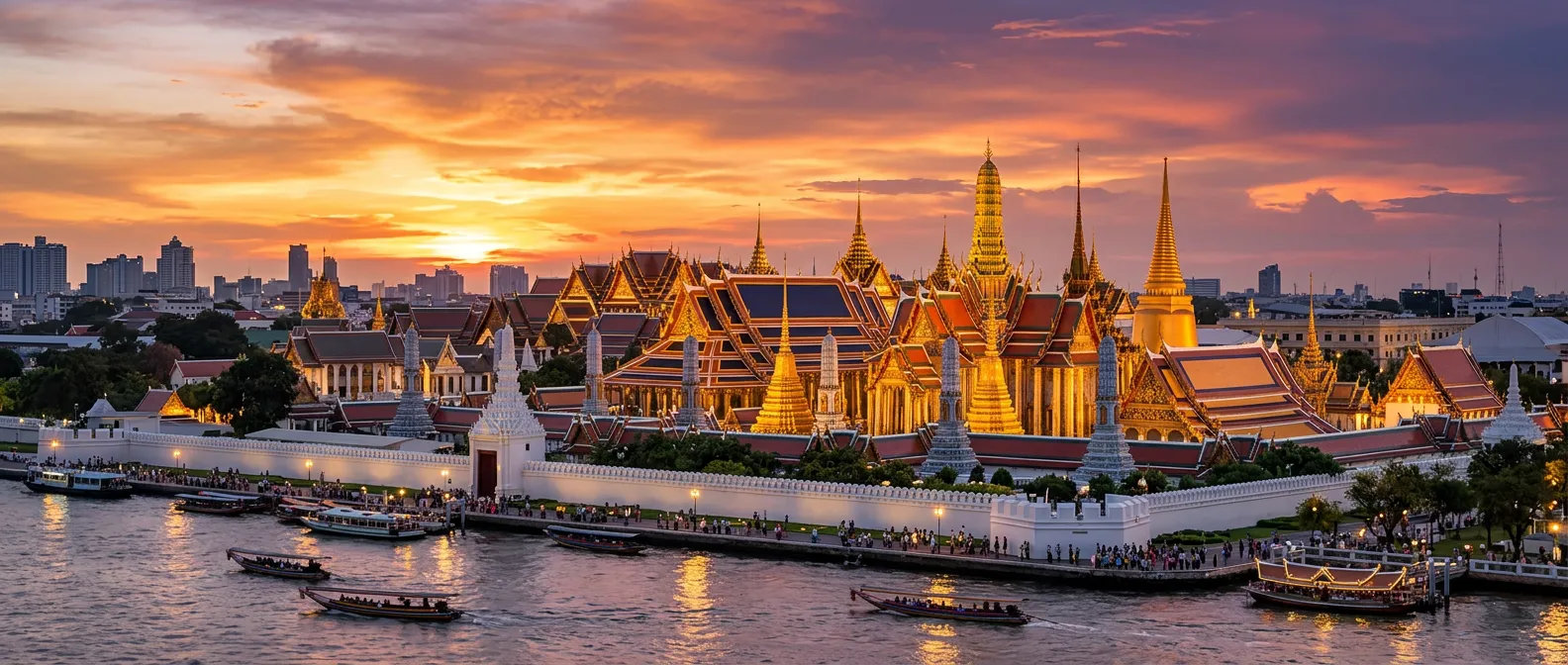
A Thailand Transit Visa (TS) allows foreigners to pass through Thailand en route to a third country, with a stay of up to 30 days. Many nationalities can transit without a visa, but citizens of certain countries must obtain one before traveling.
What Is a Thailand Transit Visa?
A Thailand Transit Visa, officially classified as visa category TS, is issued to foreign nationals who need to pass through Thailand on their way to another destination. Unlike a tourist visa, it is specifically designed for travelers who are not stopping in Thailand as their final destination.
The transit visa is valid for 3 months from the date of issue and permits a stay of up to 30 days per entry. It can be issued as either a single-entry or multiple-entry visa, depending on your travel needs.
Key characteristics of the Thailand Transit Visa:
| Feature | Details |
|---|---|
| Visa Category | TS (Transit) |
| Validity | 3 months from issue |
| Maximum Stay | 30 days per entry |
| Entry Type | Single or Multiple |
| Employment Allowed | No |
| Extendable | Generally no |
The transit visa is not the same as a visa exemption or a tourist visa. If you plan to explore Thailand for leisure, a Thailand tourist visa is more appropriate.
Who Needs a Transit Visa for Thailand?
Whether you need a transit visa depends on your nationality and whether you plan to leave the airport’s transit area.
Visa-Exempt Nationalities (No Transit Visa Needed)
Citizens of the following countries can transit through Thailand without a visa for up to 30 days (or 60 days for many nationalities under the visa exemption scheme):
- Europe: United Kingdom, Germany, France, Italy, Spain, Netherlands, Belgium, Sweden, Norway, Denmark, Finland, Switzerland, Austria, Portugal, Ireland, Poland, Czech Republic, and most EU/EEA countries
- Americas: United States, Canada, Brazil, Argentina, Chile, Peru
- Asia-Pacific: Japan, South Korea, Australia, New Zealand, Singapore, Malaysia, Hong Kong, Indonesia, Philippines
- Others: South Africa, UAE, Israel
Nationalities That Typically Require a Transit Visa
Citizens of the following countries generally must obtain a transit visa even for brief airport transits:
- South Asia: India, Bangladesh, Pakistan, Sri Lanka, Nepal
- China: Mainland China (Hong Kong and Macau passport holders may be exempt)
- Africa: Most African nations
- Middle East: Varies by country – check with your nearest Thai embassy
- Others: Taiwan (for stays beyond permitted period), certain Central Asian nations
Important: This list is not exhaustive. Always verify requirements with the Royal Thai Embassy or Consulate in your country before traveling.
Thailand Transit Visa Requirements
To apply for a Thailand Transit Visa, you will need the following documents:
Required Documents
- Valid Passport – Must be valid for at least 6 months beyond your intended date of entry into Thailand
- Completed Visa Application Form – Available from the Thai embassy or consulate
- Recent Passport-Sized Photo – Usually 4×6 cm, taken within the last 6 months
- Confirmed Onward Ticket – Proof of travel to a third country (flight booking, e-ticket)
- Visa for Destination Country – If your final destination requires a visa, you must hold a valid one
- Proof of Financial Means – Bank statements or evidence you can support yourself during transit
- Accommodation Proof – If staying overnight, a hotel reservation (not required for airside transit)
Additional Requirements by Embassy
Some Thai embassies may request additional documents such as:
- Travel itinerary
- Employment letter or proof of residence
- Travel insurance covering your transit period
Always check with your specific embassy, as requirements can vary.
How to Apply for a Thailand Transit Visa
There are two main ways to apply:
Option 1: Apply at a Thai Embassy or Consulate
- Locate your nearest Royal Thai Embassy or Consulate
- Gather required documents as listed above
- Submit your application in person (some embassies accept mail applications)
- Pay the visa fee
- Wait for processing – typically 3-5 business days
- Collect your passport with the visa sticker
Option 2: Thailand e-Visa
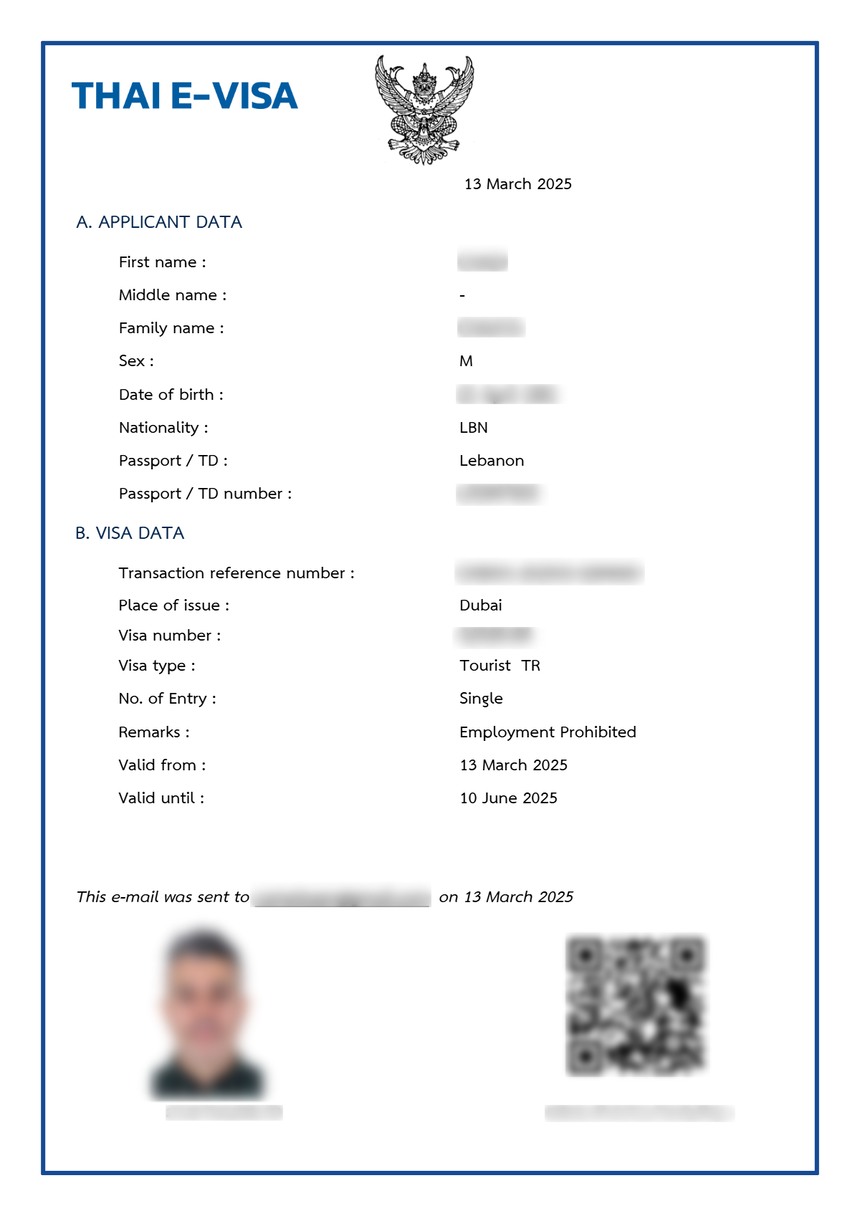
Thailand’s e-Visa system (https://www.thaievisa.go.th/) allows eligible nationals to apply online:
- Create an account on the e-Visa portal
- Select “Transit Visa” as your visa type
- Fill in personal and travel details
- Upload required documents (scanned passport, photo, onward ticket)
- Pay the fee online
- Receive your e-Visa approval via email
- Print the approval to present at immigration
Note: Not all nationalities are eligible for e-Visa processing. Check the portal for your country’s eligibility.
Thailand Transit Visa Fees and Processing Time
| Visa Type | Fee (Approx.) | Processing Time |
|---|---|---|
| Single Entry Transit Visa | THB 1,900 (~USD 55) | 3-5 business days |
| Multiple Entry Transit Visa | THB 3,800 (~USD 110) | 5-7 business days |
| e-Visa (if eligible) | THB 1,900 (~USD 55) | 3-10 business days |
Fees may vary slightly depending on the embassy or consulate and your nationality. Some embassies charge additional service fees.
Airside vs. Landside Transit
Understanding the difference between airside and landside transit is crucial:
Airside Transit (Staying in the Airport)
- You remain in the transit area of the airport
- You do not pass through immigration
- You do not collect your luggage
- Your next flight departs from the same terminal or connected terminal
- Many nationalities do NOT need a transit visa for airside transit
Landside Transit (Leaving the Airport)
- You pass through immigration and enter Thailand
- You may collect luggage, change terminals, or stay overnight
- You need a valid visa (transit visa, visa exemption, or tourist visa)
- You must clear immigration again when departing
Suvarnabhumi Airport (BKK)
Bangkok’s main international airport has a well-equipped transit area with:
- Transit lounges and rest areas
- Duty-free shopping
- Restaurants and cafes
- Free Wi-Fi
- Transit hotel (within the secure area)
Don Mueang Airport (DMK)
Bangkok’s budget airline hub has more limited transit facilities. If connecting between airlines at different Bangkok airports (BKK ↔ DMK), you must pass through immigration and will need a valid visa.
Transit Visa vs. Visa Exemption vs. Tourist Visa
| Feature | Transit Visa (TS) | Visa Exemption | Tourist Visa (TR) |
|---|---|---|---|
| Purpose | Pass through Thailand | Short visit | Tourism |
| Stay Duration | Up to 30 days | 30-60 days | 60-90 days |
| Validity | 3 months | N/A (stamp on arrival) | 3-6 months |
| Extendable | No | Yes (30 days) | Yes (30 days) |
| Cost | THB 1,900 | Free | THB 2,000-4,000 |
| Best For | Connecting flights | Short holidays | Extended travel |
| Requires Onward Ticket | Yes | Recommended | No (for full validity) |
If you are unsure which option suits your trip, see our guide on Thailand visa types for a complete overview.
Practical Tips for Transiting Through Bangkok
- Minimum Connection Time: Allow at least 2-3 hours for international connections at Suvarnabhumi
- Same Airport: Ensure both flights use the same airport (BKK or DMK) to avoid needing a landside visa
- Luggage: Confirm with your airline whether luggage is checked through to your final destination
- Overnight Layovers: If staying overnight, you will need a transit visa or visa exemption to leave the airport
- Transit Hotel: Suvarnabhumi has a transit hotel inside the secure area – book in advance for overnight layovers
- Currency Exchange: Available in the transit area, but rates are better landside
For information about the Digital Arrival Card required for entry, see our Thailand TDAC requirements page.
Common Reasons for Transit Visa Rejection
Avoid these pitfalls to improve your chances of approval:
- Insufficient passport validity – Less than 6 months remaining
- Missing onward ticket – No confirmed booking to a third country
- No destination visa – If your final country requires a visa, you must already have it
- Incomplete application – Missing documents or unsigned forms
- Unclear travel purpose – Not demonstrating genuine transit intent
- Previous visa violations – Overstaying in Thailand or other countries
Frequently Asked Questions
Do I need a transit visa if I stay in the airport?
If you remain in the **airside transit area** and do not pass through immigration, many nationalities do **not** need a transit visa. However, citizens of certain countries (including India, Bangladesh, Pakistan, and several African nations) may still need one. Check with your airline or the Thai embassy.
Can I leave the airport with a transit visa?
Yes. A transit visa allows you to pass through immigration and enter Thailand for up to 30 days. However, the primary purpose should be transit, not tourism.
Can I convert a transit visa to a tourist visa in Thailand?
Generally, **no**. Transit visas cannot be converted to other visa types while in Thailand. You would need to apply for a new visa from a Thai embassy or consulate abroad.
How long does it take to get a Thailand transit visa?
Processing typically takes **3-5 business days** at most embassies. e-Visa applications may take **3-10 business days**. Apply at least 2 weeks before travel.
Is there a transit visa on arrival in Thailand?
Thailand does **not** offer transit visas on arrival. You must obtain one before traveling, either from a Thai embassy/consulate or through the e-Visa system.
What is the fee for a Thailand transit visa?
A single-entry transit visa costs approximately **THB 1,900** (about USD 55). A multiple-entry visa costs approximately **THB 3,800** (about USD 110). Fees vary by embassy and nationality.
Do children need a transit visa?
Yes. All travelers, including children and infants, need their own transit visa if their nationality requires one. Each child must have a valid passport.
What if my connecting flight is at a different Bangkok airport?
If you need to travel between Suvarnabhumi (BKK) and Don Mueang (DMK), you **must** pass through immigration and will need a valid visa – either a transit visa, visa exemption, or tourist visa. Free shuttle buses connect the two airports.